
Your guest wants a second drink at the pool bar, but the card is back in the room. Tomorrow they would book a massage, if it didn’t take a phone call. Most hotel upselling gets lost in the steps between wanting and buying. Here’s wher, and what it costs you.
Few ideas are as widely shared across hotel executive committees as this one: the guest who is already on property is the most profitable customer you will ever have. The reasoning holds up. According to Harvard Business Review, acquiring a new customer costs anywhere from five to 25 times more than keeping an existing one, depending on the industry and the study you trust, and the guest lying by your pool has already cleared that hurdle. You paid for the campaign, the channel commission or the rate discount it took to bring them in; now they are on property for several days, with free time, a vacation mindset and every reason to enjoy what you have built.
The industry has drawn the obvious conclusion. When Oracle Hospitality and Skift surveyed more than 600 hoteliers for the 2022 edition of their report Hospitality in 2025, 49% strongly agreed that special amenities and upgrades are critical to their revenue strategy. A year earlier, only 23.2% had answered with the same conviction. In twelve months, the share of executives who saw upselling as central to how their property makes money more than doubled.
The thing is that the methods many resorts still use to capture that revenue were built for a guest who did not carry a phone, and they have changed far less than the guest has. There is a brochure on the nightstand listing the excursions. The spa has a desk on the lower level and an extension number. The specialty restaurant is booked through the front desk. Offers arrive by email or on a poster next to the elevator, identical for the honeymooners and the family of five, and some services come with fine print, such as a water circuit reserved for guests on a higher plan. Each of these mechanisms puts the effort on the guest’s side: the resort offers, and the guest has to go looking.
Seen from a lounger, all of it adds up to a single impression, which is that the resort is looking for ways to make them spend more. That impression carries a cost of its own, because it is hard to sell anything to someone who feels they are being sold to all day, and the paradox is that the same guest is perfectly willing to spend. Research by Medallia among more than 3,600 hotel guests and retail customers found that 61% are willing to pay more for a personalized experience, while only 25% of the experiences they receive are highly personalized. For hotels, the more telling finding sits elsewhere: the stay itself is the stage of the trip where guests are least likely to recall any personalization, with an average recall of 46%, below booking, customer service, check-in, check-out and the contact after the stay.
The moment your guest is on property, with time and willingness to spend, is precisely the moment they are being sold to worst.
Two guests, one afternoon
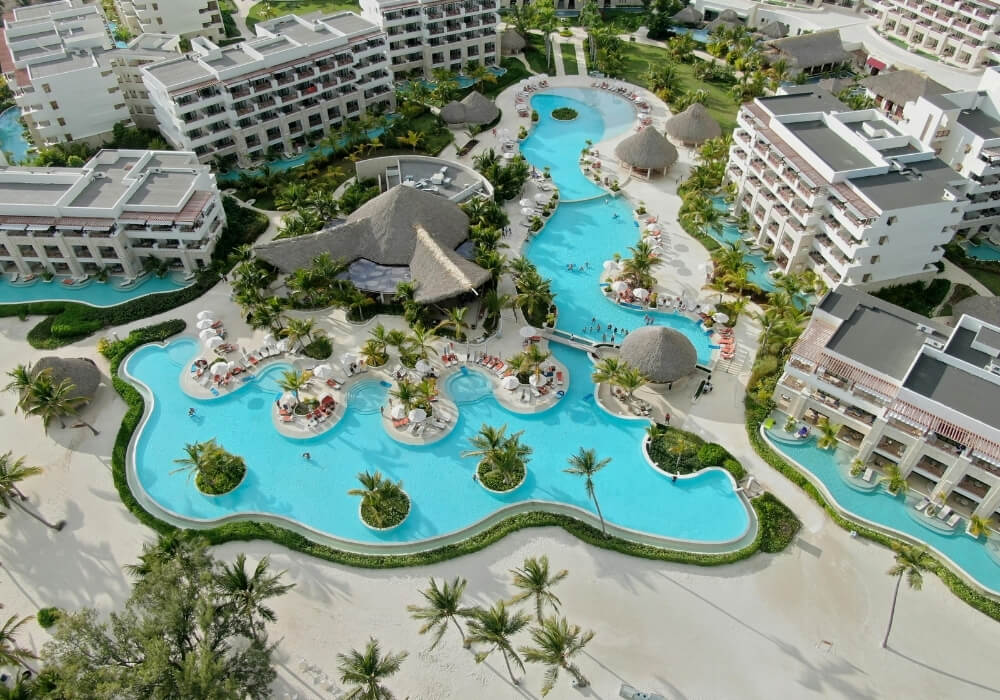
To see where that revenue goes, imagine two families of four, each with two children under 12, staying at two resorts that are identical on paper: same category, same pool bar, same spa menu, same excursions and same prices.
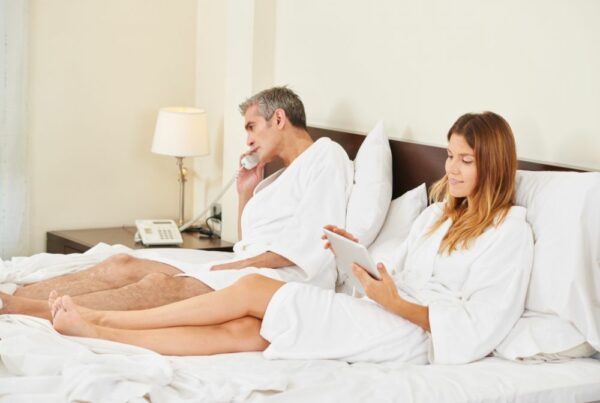
At the first resort, it is 4 pm and one of the parents would like a second drink at the pool bar, but the card and the phone are back in the room, and going up for them means leaving the kids, so the drink never gets ordered. The next morning, still in bed, the other parent thinks about a massage; booking it means calling the spa or walking down to the desk, so it gets pushed to the afternoon, then to tomorrow, and by the end of the stay it has quietly dropped off the plan. Halfway through the stay, an email goes out to every guest recommending the chef’s tasting menu for a romantic evening, which this family deletes without opening. The excursion brochure gets a proper look on the last day, when there is no time left to book anything, which is the pattern we described in the invisible catalog of resort activities.
At the second resort, the parent at the pool orders the drink and pays for it with a tap of the NFC wristband, without a card, a phone or a check to sign. The massage is booked from bed after scanning a QR code that opens the resort’s WebApp and shows the open slots. The excursions sit in the same WebApp with dates and availability, on the phone the family already carries, and on arrival day they receive a single message about the kids’ activity that families with children that age tend to book at this resort.
The second family received fewer offers than the first and almost certainly spent more, and nothing about their stay felt like a sales pitch. The difference between the two afternoons, however, appears nowhere in the first resort’s P&L. There is no line for the drink nobody ordered or for the massage nobody booked; the F&B team reads a quiet afternoon at the pool bar as low demand, when it was demand that never found a way in. And the most common response to that silence, sending more offers, adds pressure on the very guest who was struggling to buy in the first place.
A layer your guest never sees
In the same Oracle and Skift report, Sanjay Sharma, head of IT at Jumeirah Group, summed up what any technology a hotel introduces should do: keep guests happy and make the operation invisible, both to the team and to the guests themselves. Applied to upselling, the principle is a demanding one. The sale has to be available at the exact moment the wish appears, so that the only thing left for the guest to do is decide.
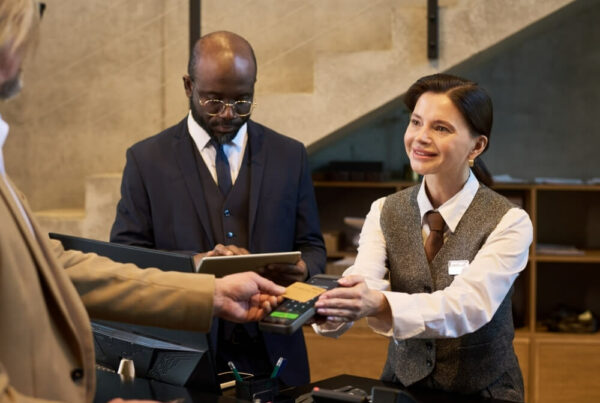
That is what the wristband does at the pool bar. When it is linked to the guest’s profile in your PMS, NFC cashless payments take the moment of paying out of the purchase, and the value holds across every plan type: under European Plan it removes the friction at every point of sale; in an all-inclusive it identifies the guest at each outlet and lets them charge whatever sits outside their plan; and in any plan, the same credential opens their room. The identity behind each charge matters to your operations team as well, which is why we have written that hotel chargebacks are the bill for operating without identity, and at Hard Rock Hotel Riviera Maya that same wristband is the single credential for a 1,264-room all-inclusive.
The WebApp does the same for everything that cannot be ordered at a bar. Your guest scans a QR code, opens your guest WebApp in their own browser without downloading anything, and finds your whole catalog in one place, from spa slots and room service to restaurant tables and Thursday’s excursion, with live availability. The brochure on the nightstand stops being the only place where your offer and your guest can meet.
Krystal Cancún, a 502-room resort in Cancún’s hotel zone, shows what happens when ordering and booking become that easy. In its first six months of operation with Goguest, activity bookings grew 227% and room service orders grew 59%. You can read how the deployment was built in the Krystal Cancún case study.
When saying yes takes a single gesture, your guests say yes.
Fewer offers, better aimed
Removing steps solves half of the problem; the other half is deciding what to propose and to whom. A push notification recommending a romantic dinner to every guest on property is exactly the kind of message that feeds the feeling of being chased, because for the family with three kids it is noise, while for the couple celebrating an anniversary it is a good idea. Whether an offer annoys or helps depends almost entirely on who receives it.
This is where data earns its place. When every payment, access and booking is tied to a verified guest identity, your property starts to know what each type of guest actually does during the stay. If families with children under 12 tend to book a particular activity, you can send that proposal only to the families with children that age arriving this week, at the moment it makes sense. With the Goguest WebApp you can segment your promotions by guest profile, and the result is a resort that sends fewer messages and gets more of them right.
When an offer matches what your guest was already looking for, it lands as good advice. That is the experience the 61% in the Medallia study say they would pay more for: one that feels designed around them.
What this means for your P&L
As a reference point, the typical figure across Goguest deployments is around $120 in additional revenue per occupied room per month. It is a deployment average, not a guaranteed result, because every property starts from its own plan type, occupancy and catalog of services.
You can run a first estimate with your own numbers. A 400-room resort at 80% average occupancy has about 320 occupied rooms on a given night; if your property landed on that reference, the additional revenue would come to roughly $38,400 a month. The figure is illustrative and depends entirely on where your operation starts, but it gives your next committee meeting a concrete question: how much of it is sitting today in a brochure, in a phone call nobody made or in an email nobody opened?
The question worth asking
Upselling will stay on your committee’s agenda, and it should, because the economics behind it are sound. What has changed is the way it gets captured. The resorts that sell best during the stay are the ones that have removed the most steps between what their guests want and the moment they can ask for it, and that propose only what fits each guest.
The more useful question for your property, then, is how many steps stand between your guest and the things they already want. If you would like to count them with us, book a 15-minute diagnostic with our team; we will map where those steps sit in your operation and which layer of Goguest would remove them.